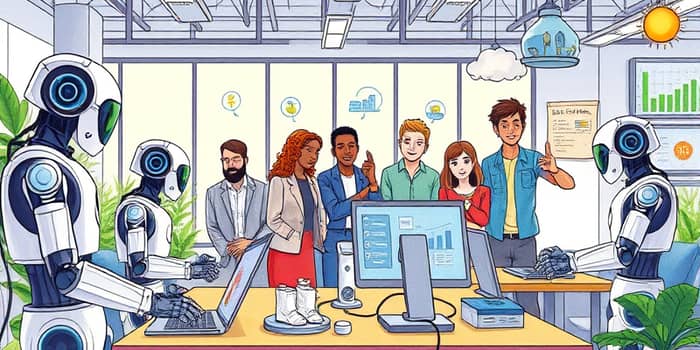
As markets shift at unprecedented speed, businesses face a pivotal moment. Adapting to emerging trends isn’t optional—it’s essential for survival and growth. In this article, we explore how organizations can navigate technological, social, and economic forces to build resilient, purpose-driven workplaces.
The next decade promises sweeping change across industries. Leaders must understand the forces driving disruption and harness them for advantage.
By 2030, 60% of businesses expect AI to transform core operations, and 40% anticipate workforce reductions due to automation. At the same time, generative AI is already boosting productivity for three-quarters of daily users, underscoring the importance of strategic technology adoption.
With 39% of today’s skills projected to become outdated by 2030, continuous upskilling is vital. The World Economic Forum estimates that 1 billion people worldwide will require reskilling within the next five years. Organizations must cultivate a learning culture that keeps pace with change.
Traditional training models struggle to meet demand. Employers planning to thrive must embrace continuous learning and accessible reskilling avenues—delivering microlearning modules, peer coaching, and on-the-job stretch assignments that align with evolving business needs.
Hybrid work has unlocked flexibility but introduced complexity. Recent studies show in-person collaboration hours are rising, while solo work time decreases. This trend calls for thoughtful space design, collaboration tools, and inclusive remote practices.
Balancing freedom and cohesion requires leaders to foster trust. Setting clear performance metrics, leveraging real-time analytics, and recognizing contributions publicly can maintain momentum across distributed teams.
Employee engagement has never been more critical. With 82% of workers reporting burnout and only 50% of U.S. employees thriving, businesses risk high turnover and low morale. Hybrid staff report lower engagement (33%) than fully in-office peers (59%), yet 90% value flexibility strongly.
Organizations should address burnout with holistic well-being programs, mental health resources, and manageable workloads. Embedding regular check-ins and fostering peer support networks can rebuild connection and purpose.
DEI initiatives drive innovation and resilience. Today, 83% of employers have formal DEI programs—a significant rise from 67% just a year ago. Companies that leverage diverse talent pools for enhanced innovation report stronger financial performance and brand reputation.
To scale DEI's impact, embed inclusive practices into recruiting, leadership development, and supplier selections. Ensure accountability by tracking diverse representation and equity outcomes across all levels.
Adapting to new realities demands a multi-pronged approach. Consider these priorities:
Successful transformation hinges on balancing technology with human-centric practices. Pair AI deployment with ethical safeguards and robust change management to minimize disruption and build trust.
At NovaTech Industries, leadership launched a skills marketplace platform that matched employees to internal projects based on emerging needs. Within six months, internal mobility increased by 40%, and critical AI projects gained momentum without external hires.
GreenLeaf Energy reimagined its hybrid office layout with collaboration hubs and soundproof pods. Coupled with a monthly “innovation day,” employee satisfaction scores rose by 25%, and cross-functional projects accelerated.
Business leaders can follow a clear roadmap to future-proof their organizations:
The future of work presents immense challenges, but also transformative potential. By embracing new technologies responsibly, fostering a culture of continuous learning, and prioritizing employee well-being, businesses can turn disruption into opportunity. The path forward demands bold leadership, unwavering commitment, and a willingness to adapt. Those who act now will define the next era of work and emerge stronger, more inclusive, and more innovative than ever before.
References